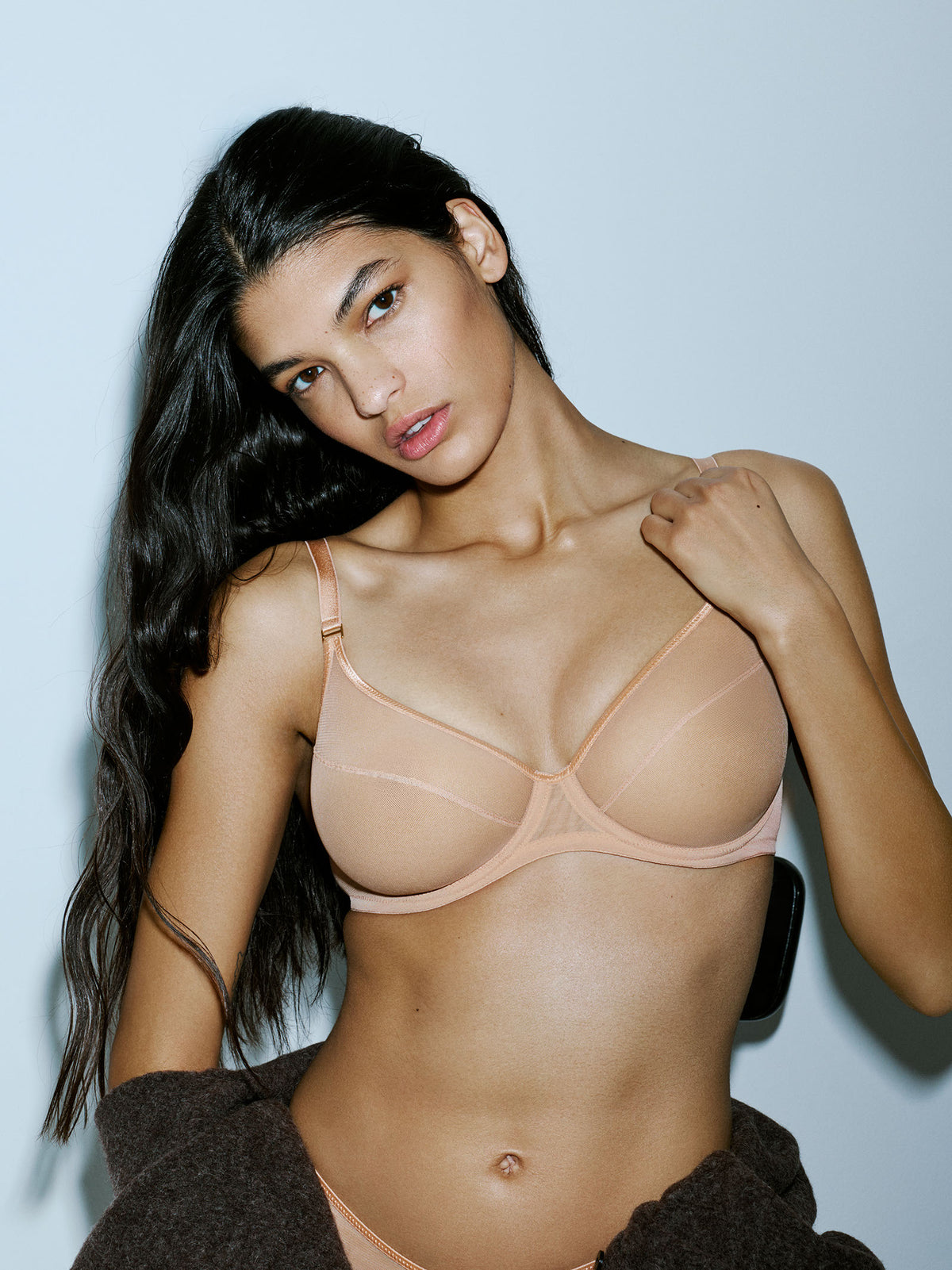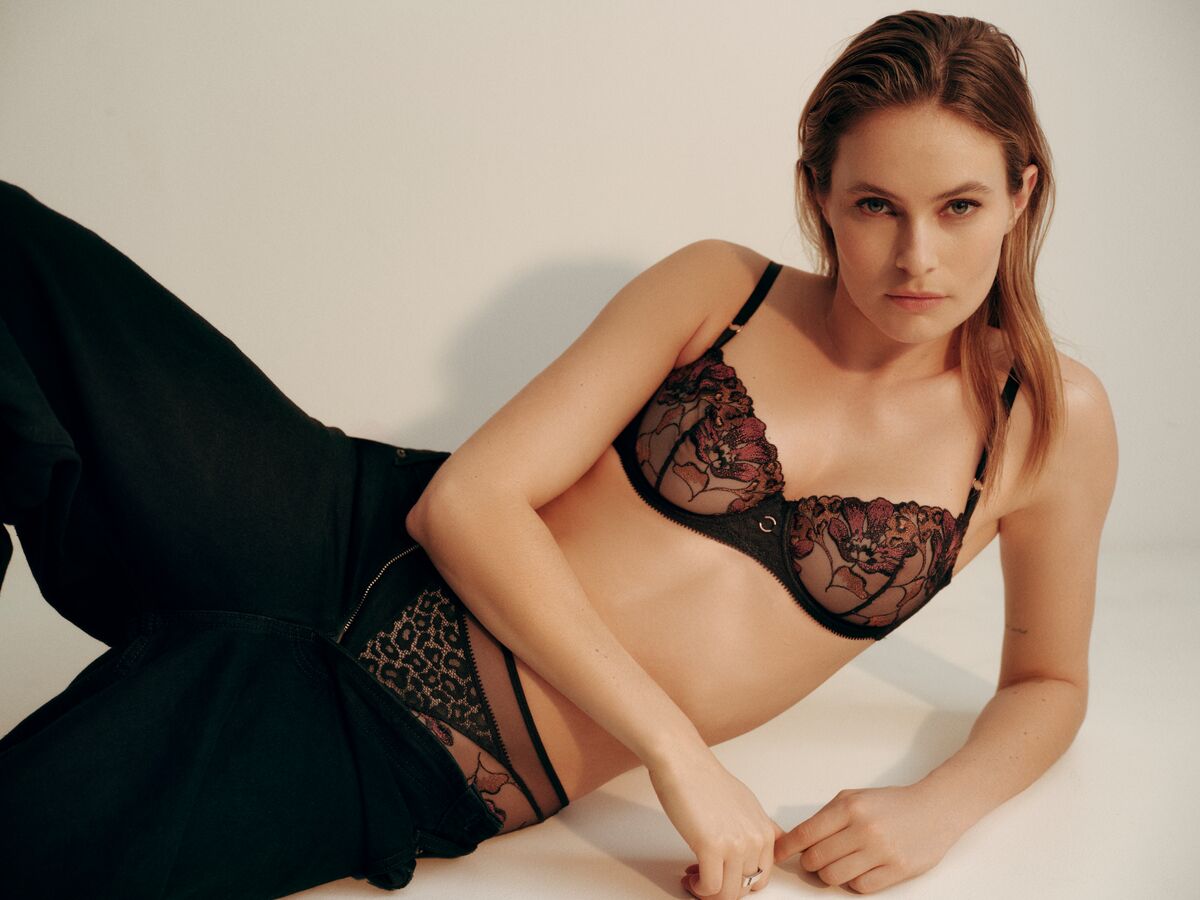
A bra that feels not quite right is a common, low-level frustration. It is rarely dramatic. It just nags: the band creeps up, the cup wrinkles, something digs slightly. The instinct is usually to give up on the bra. But almost every fit problem comes down to one simple question, and once you can answer it, you can fix most bras yourself.
The question is this: is it the band, or is it the cup?
The two jobs a bra does
Think of a bra as having two systems. The band is the support system. It is the part that holds you up, and it does the large majority of the work. The cup is the volume system. It is the part that contains and shapes your breast tissue.
When something feels off, it is almost always because one of those two systems is the wrong size. The skill is reading the symptom and tracing it back to the right one.
Signs the band is the problem
The band is too big if the back rides up, the straps dig in, or the bra feels like it is being held up from your shoulders rather than supported from underneath. A loose band is the single most common fit fault, and it creates knock-on problems everywhere else.
The band is too small if it pinches, leaves deep marks well beyond the gentle line a firm band leaves, or feels genuinely restrictive when you breathe. This is rarer, but it happens, often when someone has sized down too far to compensate for a different issue.
A quick test: with the bra fastened on the loosest comfortable hook, you should be able to slide two fingers under the band with a little resistance, and no more. If it slides up your back when you raise your arms, it is too loose.
Signs the cup is the problem
The cup is too small if breast tissue spills over the top or escapes at the side near your underarm, if the wires sit on breast tissue rather than around it, or if the centre gore floats away from your breastbone. A floating gore is one of the clearest signs you need more cup, not less.
The cup is too big if there is a gap at the top, if the fabric wrinkles when you stand still, or if the cup looks like it has more room than you fill. Be aware that this can also be a style issue. A balconette or plunge will sit differently to a full cup, so test across more than one shape before deciding.
When it is both
Here is the part that catches people out. The two systems are linked, and very often a bra that feels off needs a smaller band and a bigger cup at the same time.
It works like this. If you size the band down, the bra suddenly supports you properly, but the smaller band comes with a smaller cup, so you may now be spilling. The answer is to go down a band and up a cup, keeping the cup volume the same while tightening the support. A 36C with a loose band and a slightly tight cup is often really a 34D. The numbers look different. The bra fits.